Native American Indian Dog (NAID): A Complete Breed Guide, Temperament & Breed Truth
The Native American Indian Dog (NAID) is a distinct companion breed known for intelligence, emotional sensitivity, and stability.
Often confused with the American Indian Dog and other similarly named dogs, the NAID is not the same breed and represents a dedicated preservation effort.
This guide serves as a comprehensive reference for understanding the Native American Indian Dog, its development, and its role as a modern companion.
What is the Native American Indian Dog?
The Native American Indian Dog is a defined companion breed developed through intentional selection, not a loose classification or mixed-type dog.
The NAID is not a modern recreation, designer breed, or recent cross. It is a preserved landrace; a population of dogs shaped through function, environment, and partnership with Indigenous communities rather than through kennel club standards.
Unlike modern breeds developed for appearance or competition, the NAID was shaped by survival needs: guarding, hunting, hauling, tracking, protection, and companionship. These dogs were valued not for uniformity, but for intelligence, adaptability, resilience, and their ability to form deep bonds with their people.
Preservation of the NAID focuses on maintaining these functional traits, genetic diversity, and historical continuity rather than producing dogs to fit a narrow visual standard.
The Native American Indian Dog (NAID) represents the original working dogs of Indigenous peoples of North America. Developed and maintained over thousands of years through relationship, necessity, and environment, the NAID predates modern breed standards and aesthetic-driven breeding. Today, preservation-focused programs work to protect this lineage as a culturally, biologically, and historically significant dog.
Learn how the Native American Indian Dog compares to other similarly named breeds →
Core Characteristics of the Native American Indian Dog

History & Indigenous Roots
Indigenous peoples across North America lived in close relationship with their dogs for thousands of years. These dogs were essential partners in daily life, assisting with protection, hunting, hauling loads by travois or sled, and guarding camps and families.
The arrival of European colonization brought displacement, forced assimilation, and widespread loss of Indigenous lifeways, including traditional dog populations. Many native lineages were diluted, displaced, or intentionally eradicated.
The Native American Indian Dog has a documented preservation history and represents the careful stewardship of remaining traditional lines, carried forward by individuals and programs committed to protecting ancestral traits, working ability, and cultural significance rather than recreating a romanticized or aesthetic version of the past.

Temperament & Role
The Native American Indian Dog is known for its emotional intelligence, perceptiveness, and deep relational awareness. These traits made the dogs indispensable to their people and continue to define the breed today.
Within some Indigenous traditions, certain dogs carried a role often referred to as a medicine dog: a dog whose presence brought grounding, protection, emotional regulation, and spiritual steadiness to individuals or families. Not every NAID is a medicine dog, but the breed’s sensitivity, attunement, and loyalty make it uniquely suited to this role.
Modern NAIDs often excel as service dogs, therapy dogs, guardians, family companions, and working partners due to their calm confidence, adaptability, and strong human bonds.

Appearance & Breed Type
Because the Native American Indian Dog is a preserved landrace rather than a standardized show breed, variation in appearance is expected and appropriate. Coat types, coloration, size, and build may vary while still reflecting shared ancestral traits.
The Native American Indian Dog typically exhibits:
- Balanced, athletic structure
- Thick double coats suited to diverse climates
- Expressive eyes and alert posture
- Natural movement built for endurance rather than speed
Preservation breeding will always prioritize function, health, and temperament over uniform appearance.
Health, Genetics, and Preservation Breeding
Responsible Native American Indian Dog breeding prioritizes genetic diversity, structural soundness, and long-term health outcomes. Ethical preservation of the Native American Indian Dog requires rigorous attention to genetics, health, and long-term viability. Unlike commercial breeding models focused on volume or trend, preservation breeding emphasizes genetic diversity, sound structure, and stable temperament.
Responsible programs utilize documented pedigrees, genetic testing, health screening, and careful pairing decisions to reduce inherited disease and protect the future of the breed.
Preservation-based breeding is intentionally slow, selective, and guided by stewardship rather than profit.
Learn more about our Native American Indian Dog breeding program →
Is the Native American Indian Dog a Wolfdog?
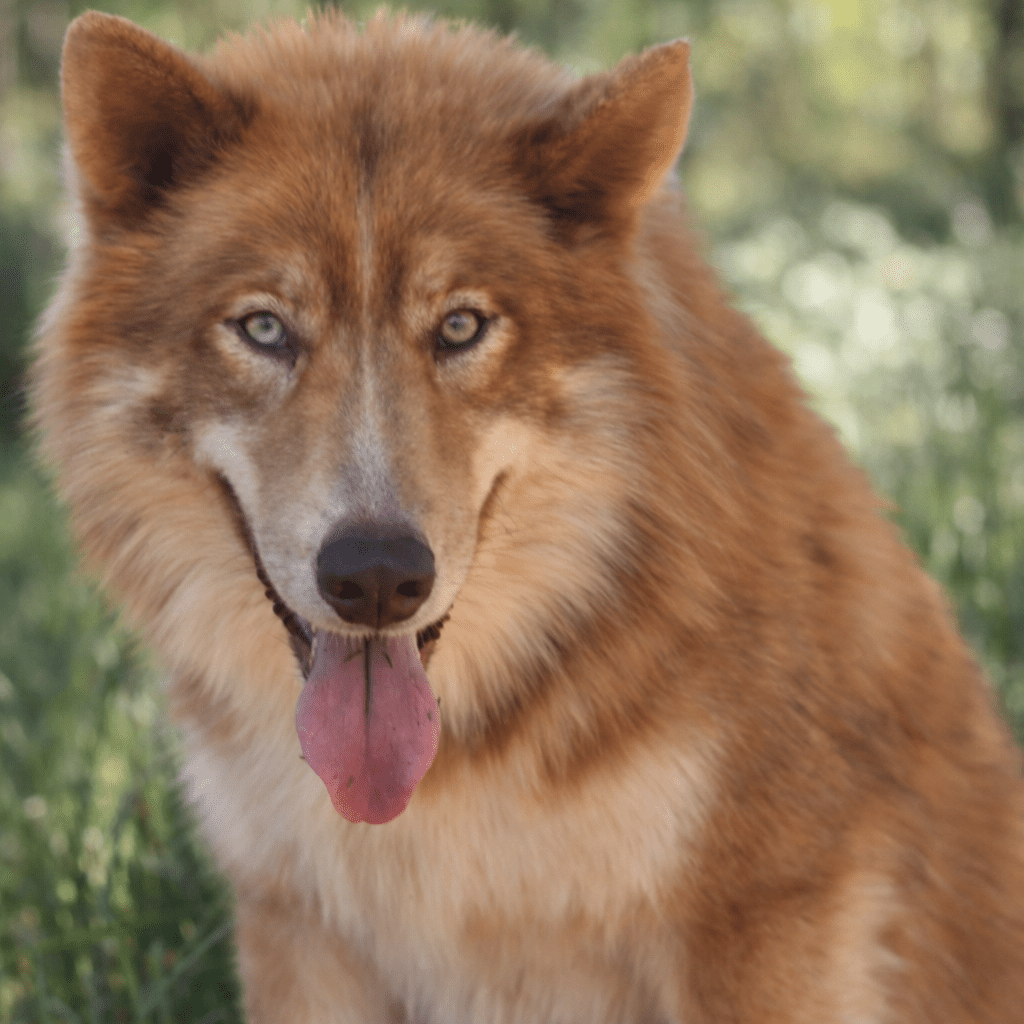
No, the Native American Indian Dog is not a wolfdog.
While the breed may share some physical traits with primitive or northern dogs, it is intentionally bred for stability, temperament, and compatibility with human environments.
Though some preserved lineages will show distant ancestral markers shared with ancient canine populations, the NAID is a domesticated dog with generations of documented breeding and human partnership. Modern wolfdogs result from recent wolf–dog crossings; the NAID does not.
The presence of distant ancestral markers does not define a dog as a wolfdog, and the Native American Indian Dog is bred specifically as a stable, fully domesticated companion.
How to Interpret Embark, Ancestry, and UC Davis Test Results
Modern DNA testing can sometimes detect distant ancestral markers, including gray wolf, without indicating recent hybridization. Interpreting these results requires understanding how genetics are inherited across generations, not just the presence of a marker.
Mislabeling NAIDs as wolfdogs contributes to misinformation, breed discrimination, and unnecessary fear.
We have explored this topic in depth, including discussions with canine geneticists and comparisons across multiple testing platforms.
Preservation efforts focus on transparency, genetic documentation, and public education to clarify these distinctions.
Native American Indian Dog vs American Indian Dog
The Native American Indian Dog is often confused with the American Indian Dog and other similarly named breeds.
These are not the same. They differ in origin, breeding practices, and intended temperament. Understanding this distinction is essential when researching or choosing a dog.
Understanding this distinction is critical, as misinformation about similarly named breeds is common in online search results.
Understand the differences between the Native American Indian Dog (NAID) and similar breeds
The Role of the Native American Indian Dog Preservation Project
Corn Moon Medicine Dogs serves as the founding program behind this preservation effort and has played a central role in shaping the modern understanding of the Native American Indian Dog.
The Native American Indian Dog Preservation Project (NAIDPP) was established to safeguard the breed through documentation, ethical standards, and collaborative stewardship. The project works to identify authentic lineages, maintain genetic diversity, and support breeders committed to preservation rather than commercialization.
Through education, record-keeping, and ethical governance, NAIDPP seeks to ensure the Native American Indian Dog remains a living cultural and biological legacy for future generations.
Explore the mission and preservation efforts of the Native American Indian Dog Preservation Project
Learning More About the Native American Indian Dog
Those seeking a Native American Indian Dog are encouraged to learn deeply, ask questions, and work with preservation-based breeders who prioritize ethics, transparency, and long-term stewardship.
To learn more about preservation breeding or our role within the NAID Preservation Project, explore the resources below.
What is a Native American Indian Dog?
Learn more about the cost of a Native American Indian Dog and what goes into the price →
Top Five Mistakes New NAID Keepers Make
Native American Indian Dog FAQ
1. Is the Native American Indian Dog (NAID) a wolfdog?
No. The NAID is a domesticated dog maintained through documented breeding and human partnership. Wolfdogs involve recent wolf–dog crossings, which is not what defines NAIDs.
2. What is the difference between the NAID, the AID, and the NorthAID?
These names are often used interchangeably online, but they absolutely refer to different populations, programs, and breeding goals. It’s important to evaluate documentation, lineage claims, and preservation standards rather than relying on name alone.
Learn the difference between the NAID, AID, and NorthAID
3. Is the NAID a recognized breed?
The NAID is often described as a preserved landrace rather than a modern standardized show breed. Some programs pursue formal recognition, but preservation work centers on stewardship, documentation, and long-term viability.
4. What is meant by “preserved landrace”?
A landrace is a population shaped by function, environment, and relationship over time rather than by modern aesthetic standards. Preservation focuses on maintaining traits, diversity, and continuity.
5. What is the NAID temperament like?
Many NAIDs are known for emotional intelligence, sensitivity to their people, stable confidence, and strong bonding. As with any dog, temperament varies by lineage, raising practices, and individual personality.
6. Are NAIDs good family dogs?
Often yes, when matched thoughtfully to the right home and raised with structure and socialization. They tend to thrive with engaged families who value training, relationship, and daily interaction.
7. Do NAIDs need a lot of exercise?
They typically do best with consistent physical activity and mental enrichment. The goal isn’t nonstop running, it’s a balanced routine that meets both mind and body needs.
8. Why do NAIDs vary in appearance?
Because the NAID is preserved as a landrace rather than bred to a narrow show standard. Variation in coat, color, and build can occur while still reflecting shared ancestral traits.
9. What makes preservation breeding different from commercial breeding?
Preservation breeding prioritizes documentation, genetic stewardship, health screening, stable temperament, and long-term sustainability over volume, trends, or aesthetics.
10. Where can I read the in-depth genetic explanation about “wolfdog” claims?
We’ve compiled deeper, evidence-based resources, including expert genetic insight, on our educational blog.
Is the NAID a Wolfdog? Understanding DNA, Ancestry, and Breed Preservation
11. How much does a Native American Indian Dog cost?
The cost of a Native American Indian Dog through our program is typically around $3,400.
This reflects the level of care, health testing, nutrition, and time invested in responsibly breeding and raising each dog. Our program is focused on long-term health, stability, and preservation, and not volume production.
To better understand what goes into the cost of a NAID, you can read more here →
If you are considering bringing a Native American Indian Dog into your life, the next step is to begin the process.