For years, hip testing in dogs has revolved around one name: OFA.
For years, breeders have proudly announced “OFA Certified” as though it represents the highest possible standard.
It does not.
It represents the minimum.
And as a preservation project entrusted with a rare and genetically vulnerable breed, minimum is no longer enough.
OFA has served the dog community well for decades. It helped create structure and accountability in hip screening. But science evolves and so must we.
If you are researching PennHIP vs OFA for breeding dogs, it’s important to understand that PennHIP measures hip joint laxity using a Distraction Index (DI), while OFA evaluates structural conformation using visual grading. The difference affects predictability and long-term genetic improvement.
The Native American Indian Dog Preservation Project has quietly been implementing PennHIP screening over the past several months. After completing multiple dogs and reviewing both the science and our own data, we are now formally adopting PennHIP as our preferred hip screening method for core breeding stock.
This is not a cosmetic change.
This is a philosophical shift.
We are no longer satisfied with “passing.”
We are selecting for better. For tighter. For stronger. For predictive. For best.
What Is OFA? And Why It’s Not Enough
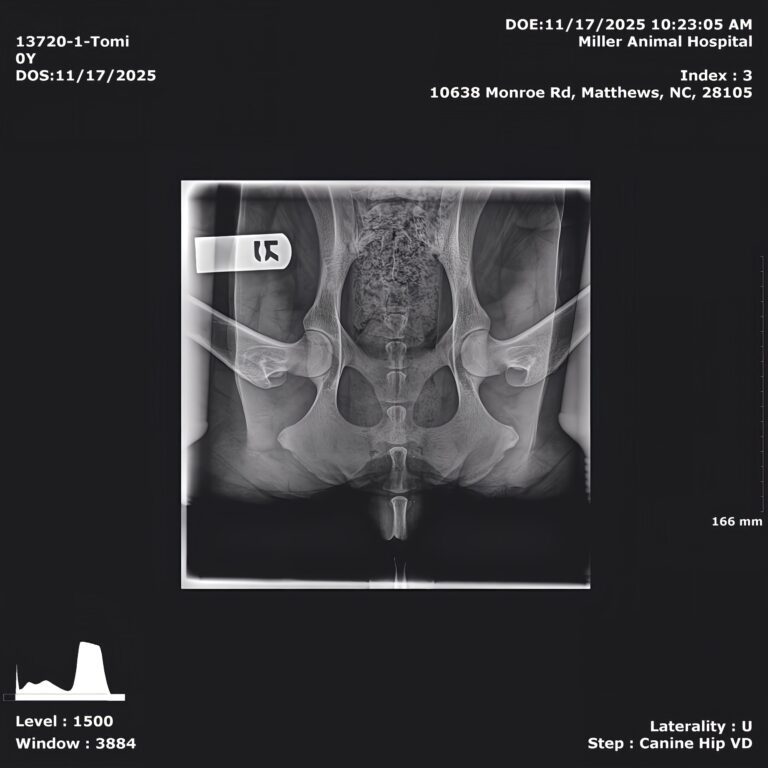
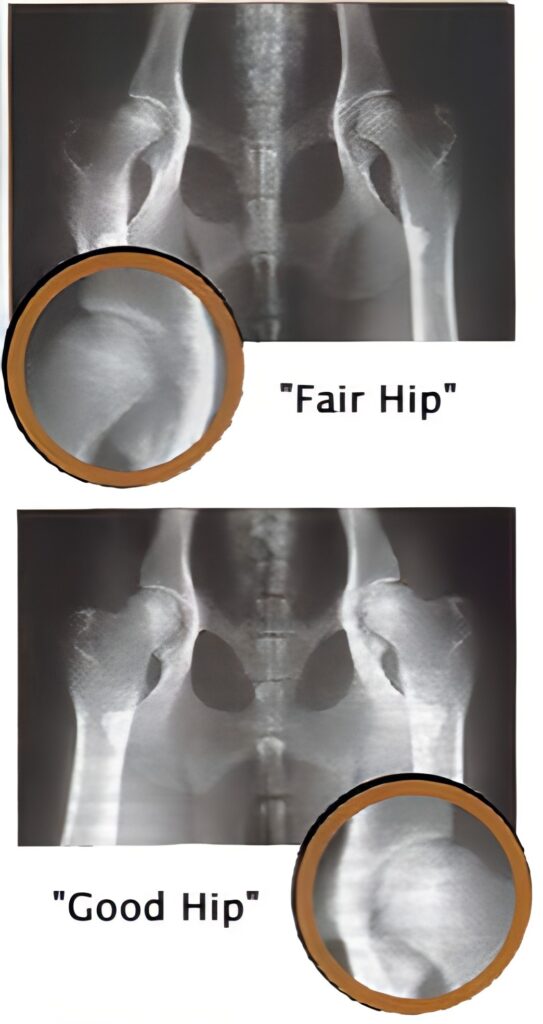
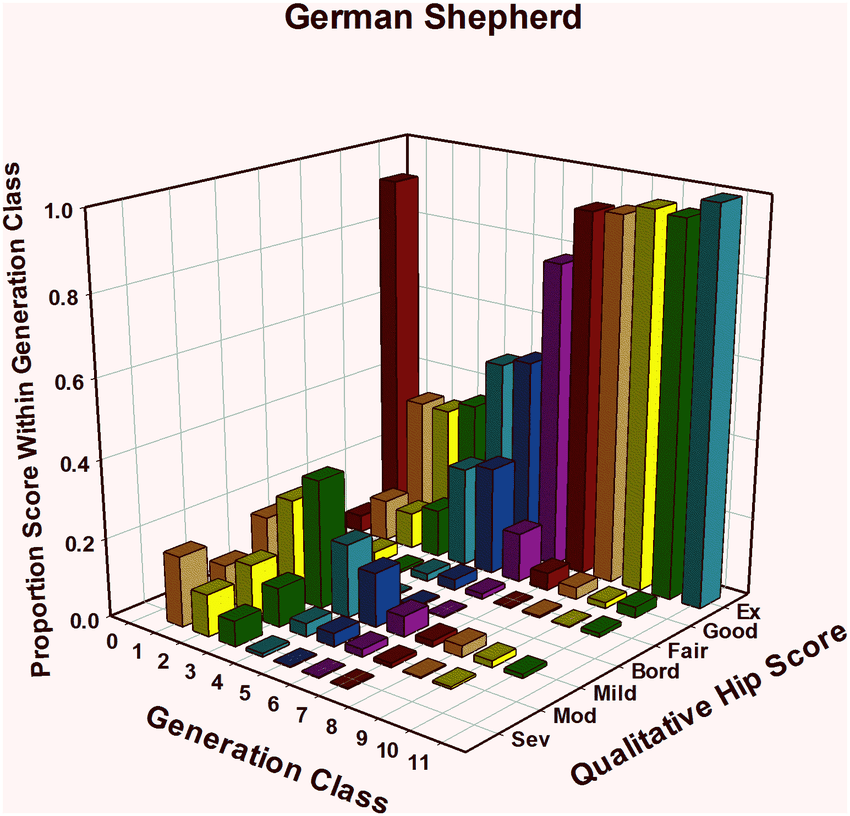
Orthopedic Foundation for Animals (OFA) evaluates hip conformation using a single extended-leg radiographic view. Radiologists visually assess the structure and assign a grade: Excellent, Good, Fair, Borderline, Mild, Moderate, or Severe.
Key facts:
- It is structural and appearance-based
- It is subjective
- It requires the dog to be 24 months old for final certification
- It does not measure joint laxity
- A dog with loose hips can (and they often do) still “pass”
This matters because hip dysplasia is not primarily a structural disease. It is a laxity disease.
Joint looseness (laxity) is the primary biomechanical predictor of future arthritis and degeneration. OFA does not directly measure that variable.
For decades, breeding programs relied on OFA. And despite good intentions, large population studies have shown inconsistent and limited long-term reductions in hip dysplasia when selecting on OFA grades alone.
OFA documents condition.
It does not optimize genetic progress.
For a rare preservation breed, that distinction is critical.
Orthopedic Foundation for Animals hip grading system
What Is PennHIP? And Why It Changes Everything
University of Pennsylvania’s Hip Improvement Program (PennHIP) was designed differently.
PennHIP measures joint laxity directly.
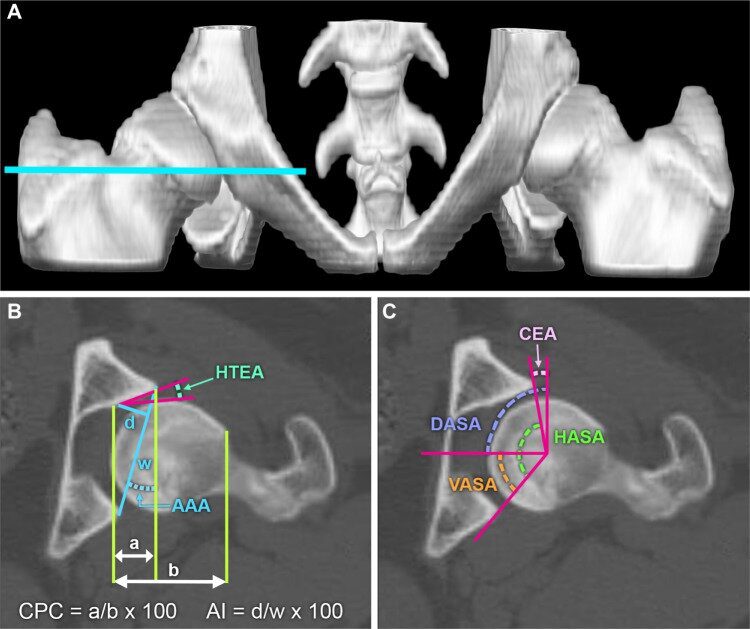
It uses three radiographic views and calculates a Distraction Index (DI), an objective numerical measurement of how loose or tight the hip joint is.
Lower DI = tighter hips.
Higher DI = looser hips.
PennHIP provides:
- Objective, numerical data
- Breed-specific percentile rankings
- Valid-for-life certification
- Testing eligibility from 16 weeks of age
- Direct measurement of the trait that predicts disease
Joint laxity is:
- Heritable
- Selectable
- Predictive of arthritis
- Responsive to breeding pressure
This means PennHIP doesn’t just describe hips.
It allows you to improve them genetically.
That is the difference.
University of Pennsylvania Hip Improvement Program (PennHIP)
The Data: 25+ Years of Evidence
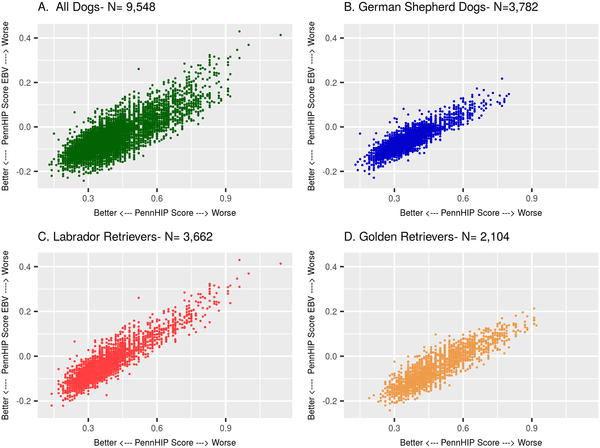
PennHIP has over two decades of peer-reviewed research demonstrating:
- Dogs selected for low DI values produce tighter-hip offspring
- Breeding programs using DI thresholds dramatically reduce dysplasia incidence
- Some long-term programs have nearly eliminated hip dysplasia when consistent thresholds were applied
OFA-based programs have not shown anywhere near the same level of measurable genetic advancement.
This is not a matter of opinion.
It is outcome data.
And we are in the business of outcomes.
Why OFA Is the Bare Minimum and Not “Above and Beyond”
There is a narrative in the dog world that OFA equals “high standard.”
It does not. It equals compliance. It is the baseline.
Many platforms, such as Good Dog, award health testing badges based on dogs meeting criteria, but they do not honor the quality of excellent test results over mediocre results.
Here is the uncomfortable truth:
A dog with OFA “Fair” hips receives the same badge as a dog with PennHIP results in the top 5% of the breed.
That is not nuance. That is flattening.
Many breeder directories operate on minimum compliance models. While this helps establish baseline accountability, it does not always distinguish between passing and exceptional.
Passing is not excellence. And in a rare breed, mediocrity compounds. Our goal is not simply to meet criteria. Our goal is to improve the breed measurably with each generation.
If we want the best, we must select the best.
Why We Are Making This Shift Now
When NAIDPP began, OFA allowed us to rapidly establish compliance and bring structure into the program.
That phase is over. We have matured.
We now have:
- Multi-generation data
- Lineage tracking
- Genetic diversity initiatives
- Reproductive science integration
- Long-term breed goals
Our responsibility has shifted from “establishing legitimacy” to refinement and elevation.
We are not here to clear dogs. We are here to improve the breed.
Economics: The Cost of Doing It Right
PennHIP costs more upfront.
Typical ranges:
- OFA: $200–400
- PennHIP: $600–1000
But PennHIP often costs less over a breeding dog’s lifetime:
- No repeat testing at 24 months
- Earlier decision-making
- Avoids investing in unsuitable breeding dogs
- Reduces dysplastic offspring
- Protects buyers
- Reduces downstream veterinary costs
Cheap screening is expensive long-term. Up-front investment is stewardship.
Beyond Hips: What “Best” Actually Means
Hip quality does not exist in isolation. Structural integrity, immune function, nutrition, environment, and responsible vaccination scheduling all interact to influence long-term orthopedic health.
Hip screening alone does not create excellence. Excellence is a system. We are not interested in “healthy enough.” We are building gold-standard dogs.
Excellence requires a systems approach: raw feeding, thoughtful vaccination protocols, early musculoskeletal protection, toxin reduction, and genetic selection working together.
That means:
Holistic Vaccination Scheduling
Not convenience-based protocols. Not over-vaccination. Not annual reflex boosters.
It means immune respect and individualized timing.
Raw, Species-Appropriate Feeding
Expensive kibble does not equal high quality.
Marketing does not equal nutrition.
Biologically appropriate food requires sourcing, cost, preparation, freezer space, and discipline.
It is inconvenient. It is expensive. It is correct.
Environmental Stewardship
Low-toxin environments. Natural rearing. Correct musculoskeletal development. Appropriate exercise timing.
Genetic Discipline
We will not breed “just passing” dogs.
We will not select mediocrity.
We will not hide behind badges.
We will select better.
Then better again.
Then better again.
The Hard Truth About the Dog Industry
Many breeders sell premium-priced puppies with minimal investment.
Many veterinarians sell convenience-based protocols labeled as “care.”
Much of modern canine “healthcare” is structured around human convenience, not optimal biological outcomes.
We are not interested in convenience.
We are interested in stewardship.
We believe these dogs are entrusted to us. And we intend to act like it.
True preservation requires substantial investment in data, in nutrition, in research, and in discipline. We are committed to making those investments.
What This Means for the Public
If you are looking for:
- A badge
- A passing score
- A minimum requirement
- A convenient narrative
We may not be your program.
If you are looking for:
- Predictive hip science
- Multi-generational improvement
- Holistic rearing
- Nutritional integrity
- Genetic advancement
- Long-term preservation
Then you are looking for breeders who use PennHIP and who operate beyond compliance.
Ask breeders:
- What is this dog’s Distraction Index?
- What percentile is the dog in the breed?
- Do you breed “Fair”?
- Or do you select the tightest hips available?
Ask about feeding.
Ask about vaccination philosophy.
Ask about toxin load.
Ask about early musculoskeletal development.
If a breeder cannot answer those questions, that tells you something.
As outlined in our Native American Indian Dog Breed Standard, structural soundness and orthopedic integrity are foundational traits in our selection process.
Refinement Is the New Phase
The NAID Preservation Project is no longer in survival mode.
We are in refinement.
Refinement requires:
- Better tools
- Better data
- Better standards
- Better discipline
PennHIP is one piece.
But it represents a larger principle:
We will not settle for passing. We will pursue best.
We will avoid mediocrity like the plague.
And we will continue building a preservation model that treats these dogs as entrusted lives, not inventory.
The question is not whether PennHIP is more expensive.
The question is whether we are ready to be the best.
We are.
Our Commitment Moving Forward
Over the past year, we have quietly begun implementing PennHIP screening across multiple dogs in our program. After reviewing the science, the outcomes, and our long-term preservation goals, we are proud to formally announce:
All incoming core breeding stock within the NAID Preservation Project will now receive PennHIP hip screening.
This decision reflects our belief that preservation requires continual refinement. OFA provided an important foundation in the early years of our project. It allowed us to establish structure and compliance while building multi-generational data.
But as our program matures, we believe it is appropriate, and responsible, to adopt the most predictive screening tool available.
This is not about invalidating the past. It is about elevating the future.
