
Part I of the Natural Rearing Series
For decades, chronic disease in dogs has become so common that many people no longer recognize it as abnormal.
Cancer is expected. Allergies are expected. Chronic ear infections, inflammatory bowel disease, skin disorders, anxiety, obesity, orthopedic degeneration, autoimmune conditions, endocrine dysfunction, early cognitive decline, collapsing health in old age, and shortened lifespans have become woven into what people now view as “normal dog ownership.” A dog reaching ten or twelve years old is often considered elderly. A large breed dog reaching fourteen may be viewed as exceptional.
Yet when we step outside the modern Western model of canine care and begin examining naturally reared populations around the world, another picture begins to emerge. Dogs are living longer, breeding longer, maintaining sounder structure, cleaner teeth, stronger immune systems, and greater vitality deep into old age. Not everywhere. Not universally. But absolutely enough that thoughtful people should be willing to pause and ask an important question:
What if the way we are raising dogs is fundamentally disconnected from the biology of the animal itself?
This question sits at the heart of natural rearing.
Natural rearing is not built on the idea that modern medicine has no place. Nor is it rooted in romanticism or nostalgia. At its core, natural rearing asks whether health is best created through constant intervention, or whether the body itself was designed intelligently, with sophisticated systems of resilience that function best when properly supported.
And if that is true, then nutrition becomes one of the most important places to begin.
Because food does not merely fill the stomach. Food builds tissue. It shapes the microbiome. It influences inflammation, hormones, metabolism, immune function, reproductive health, neurological development, and even gene expression across generations.
Food becomes flesh. And over time, it becomes inheritance.
The Forgotten Biological Question
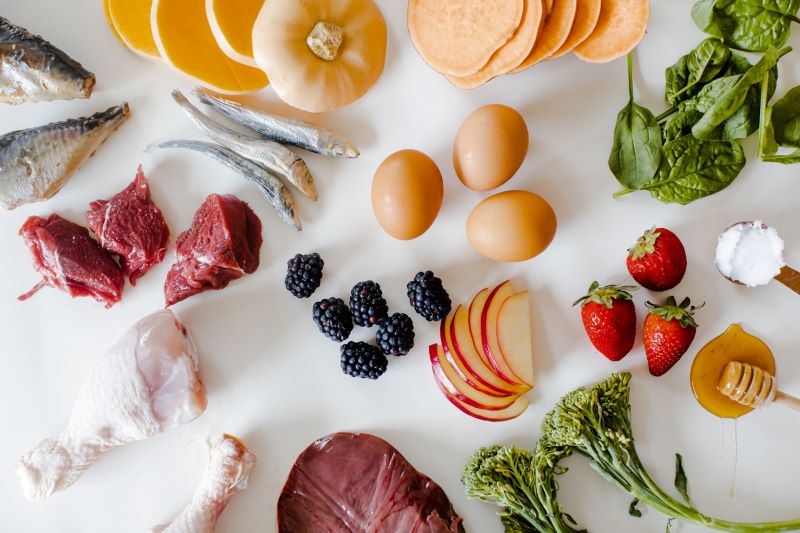
Modern feeding conversations often revolve around nutrients in isolation. Protein percentages. Fat percentages. Added vitamins. Calorie counts. Marketing terms like “complete and balanced.”
But long before nutritional science became industrialized, animals survived through biologically appropriate feeding patterns that were deeply tied to evolution and environment.
Dogs are not wolves, but neither are they biologically designed to thrive on highly processed pellets composed primarily of starches and synthetic fortification. Domestic dogs still carry digestive anatomy, dentition, feeding behaviors, prey drive, gastric acidity, and scavenging adaptations rooted in carnivorous ancestry. Even after domestication, the canine body remains extraordinarily efficient at utilizing animal tissue as its primary nutritional foundation.
In natural settings, dogs and wild canids do not consume isolated chicken breast or neatly balanced formulas. They consume connective tissue, organs, cartilage, marrow, skin, fur, feathers, bone, blood, fat, entrails, and partially digested stomach contents. Nutrient intake fluctuates seasonally. Fasting naturally occurs. Microbial exposure is constant. The diet is alive with enzymes, bacteria, and structural diversity.
The body evolved expecting complexity.
Modern feeding often replaces that complexity with extrusion, stabilization, synthetic supplementation, and shelf life.
That shift matters far more than we realize.
How the Modern Pet Food Industry Was Built
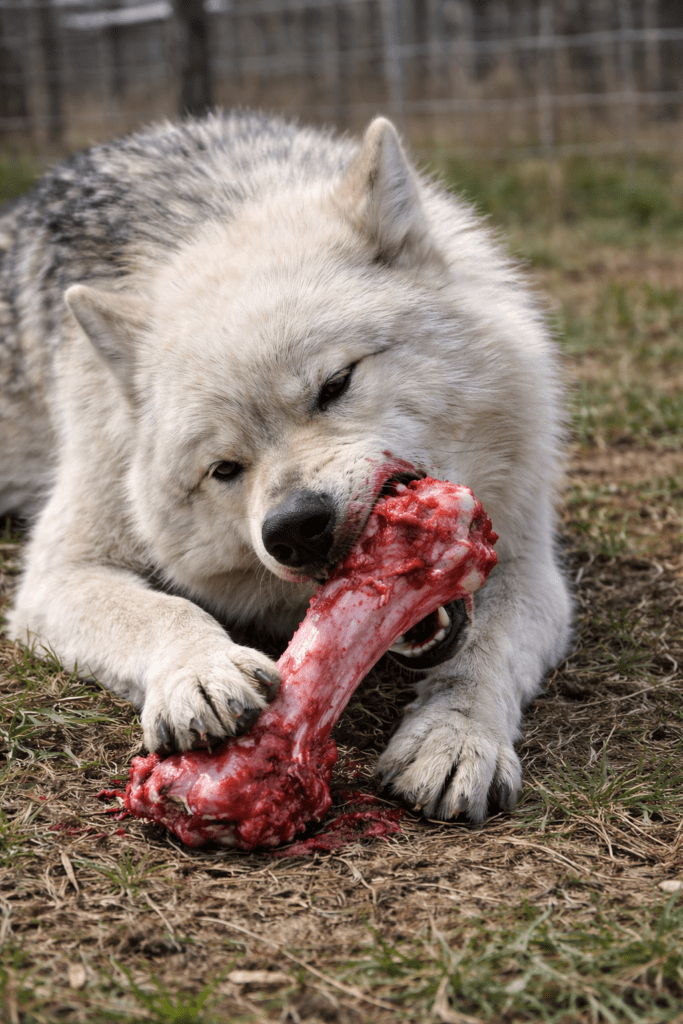
The commercial pet food industry emerged largely from economic convenience. In the mid-20th century, industrial food waste products from human agriculture became increasingly useful as low-cost ingredients for animal feed. Shelf-stable kibble solved multiple problems at once: it reduced waste, simplified feeding, maximized storage life, and created an enormously scalable business model.
The convenience was undeniable.
But convenience and biological appropriateness are not necessarily the same thing.
Dry kibble is produced through a process called extrusion, which subjects ingredients to repeated high-heat processing under pressure. While this creates a stable product with long shelf life, it also alters proteins, reduces (and often eliminates) enzyme activity, oxidizes fats, and degrades heat-sensitive nutrients. Synthetic vitamins and minerals are then added back into the formula to compensate for nutritional losses during manufacturing.
Again, this does not mean every kibble-fed dog becomes unhealthy. Biology is far more nuanced than that. Some dogs appear outwardly functional for years on commercial diets. Genetics, environment, activity level, toxic burden, stress, and countless other variables influence outcomes.
But over time, patterns emerge.
The modern dog population is experiencing rising rates of obesity, inflammatory disease, allergies, metabolic dysfunction, cancer, and chronic illness. And while no single factor alone explains this trend, nutrition deserves serious examination within that conversation.
Especially when we remember that most modern dogs consume the same ultra-processed food every single day for years.
Humans increasingly recognize the health consequences of ultra-processed diets in people. It is worth asking why similar questions are often dismissed when applied to dogs.
Inflammation and the Internal Terrain
One of the central ideas within natural rearing is the concept of terrain.
Terrain refers to the internal environment of the body: the microbiome, immune balance, inflammatory load, detoxification capacity, nutrient reserves, metabolic stability, and cellular resilience that together determine whether the body remains adaptable or begins moving toward disease.
This perspective matters because chronic illness rarely appears overnight.
Long before symptoms emerge, the terrain often shifts first.
The intestinal microbiome plays an especially important role in this process. Trillions of bacteria living within the digestive tract influence immune signaling, inflammation, neurological function, nutrient absorption, and even behavior. Researchers now understand that the gut microbiome acts almost like an additional organ system within the body.
When dogs consume fresh, biologically diverse foods, they receive not only nutrients, but microbial exposure and structural complexity that help support microbial diversity within the gut.
By contrast, diets dominated by heavily processed ingredients and repetitive starch-based feeding patterns contribute to dysbiosis, a disruption in the balance of the microbiome associated with chronic inflammation and disease.
Inflammation itself is not inherently bad. Acute inflammation is part of healing and immune defense. The problem arises when inflammation becomes chronic and unresolved.
This is where natural rearers begin asking difficult questions.
What happens when:
- inflammatory diets,
- environmental chemicals,
- repeated pharmaceutical exposure,
- chronic stress,
- indoor confinement,
- poor microbial diversity,
- and sedentary living
all combine over the course of years?
Not only within one dog, but across multiple generations?
Health Begins Before Birth

Perhaps one of the most overlooked aspects of canine health is that puppies do not begin developing at birth.
They begin developing long before conception.
A mother’s nutritional status influences fetal development, immune signaling, microbiome transfer, hormone balance, and developmental programming throughout pregnancy. Emerging research in epigenetics suggests that environmental inputs can influence how genes are expressed across generations.
This means the health of the mother affects not only her puppies, but potentially future generations as well.
At birth, puppies are further shaped by microbial exposure from the dam, nursing, skin contact, outdoor environments, soil organisms, fresh air, sunlight, and diet. These early developmental windows appear to play a profound role in shaping immune resilience later in life.
Natural rearers often focus heavily on these foundational stages because resilience is rarely created through emergency intervention later. It is cultivated gradually from the beginning.
This is one reason many natural rearing breeders place such strong emphasis on:
- maternal nutrition,
- low inflammatory living,
- fresh food feeding,
- outdoor exposure,
- minimal unnecessary chemical burden,
- and careful developmental support during pregnancy and puppyhood.
These choices are not simply lifestyle preferences. They are attempts to support the biological systems through which long-term health is built.
The Difference Between Symptom Management and Resilience
One of the reasons natural rearing can be misunderstood is because people sometimes assume it rejects all intervention.
That is not the goal.
The goal is to create dogs that require less intervention because the body itself is functioning more effectively.
There is a significant difference between keeping symptoms suppressed and building true resilience.
A resilient dog is not necessarily a dog that never encounters pathogens, toxins, stress, or environmental challenge. Resilience refers to the body’s ability to adapt, recover, regulate inflammation appropriately, and maintain stability under pressure.
This distinction matters enormously.
Because exposure alone does not always determine whether disease develops. Terrain matters too.
For example, researchers studying Lyme disease have repeatedly observed that many dogs in endemic regions develop antibodies indicating exposure to Borrelia bacteria without ever developing clinical Lyme disease. The body encountered the organism, mounted an immune response, and regulated the exposure without progressing into overt illness.
Natural rearers often view this not as proof that disease is harmless, but as evidence that immune competence matters deeply.
The question becomes: How do we build stronger, more adaptable terrain from the beginning?
The Longevity Question
One of the most controversial discussions within natural rearing involves longevity.
There are repeated anecdotal reports from natural rearing communities of dogs living well beyond average modern lifespans while maintaining surprising vitality into old age. These observations deserve thoughtful investigation, even if large-scale longitudinal studies remain limited.
Importantly, modern science increasingly supports the broader biological connection between chronic inflammation and aging itself. Researchers studying aging in both humans and animals consistently identify inflammation, metabolic dysfunction, oxidative stress, microbiome disruption, and environmental burden as major contributors to degenerative disease.
Projects like the Dog Aging Project are now exploring how lifestyle, environment, nutrition, genetics, and microbiome health influence canine aging and lifespan.
Natural rearers are paying attention to this research closely because many of the principles now being explored scientifically mirror observations holistic breeders and veterinarians have discussed for decades:
- fresh food matters,
- inflammation matters,
- environmental toxicity matters,
- microbial diversity matters,
- movement matters,
- sunlight matters,
- and resilience matters.
The deeper question may not be whether modern dogs are surviving.
The deeper question is whether they are truly thriving.
Relearning What Health Looks Like
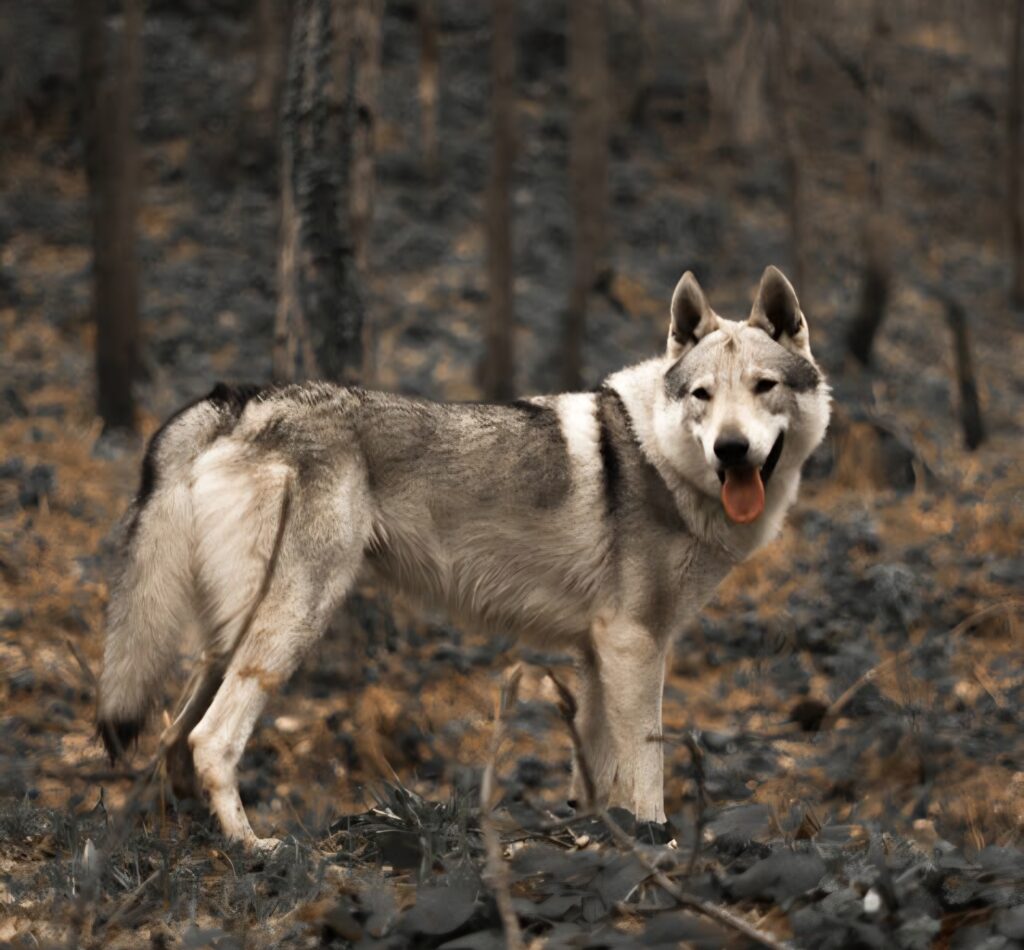
One of the most difficult parts of stepping into natural rearing is realizing how many chronic conditions have become normalized.
A dog constantly itching is considered normal. A senior dog collapsing physically by ten years old is considered normal. Chronic digestive upset is considered normal. Behavioral instability is considered normal. Cancer is considered inevitable.
But normal and common are not the same thing.
Natural rearing asks owners to become active participants in their dog’s health rather than passive consumers of protocols. It asks people to study, observe, ask difficult questions, compare outcomes, and think critically about what biological health actually looks like.
That process requires humility because none of us have every answer.
But it also requires courage because questioning long-established systems is uncomfortable!
The goal is not perfection. The goal is not fear. And the goal is certainly not rejecting every aspect of conventional veterinary medicine.
The goal is to rebuild stronger dogs from the inside out by aligning daily life more closely with biology itself.
And in many ways, it begins with something remarkably simple:
Food.
Learn about what it means to be a Natural Rearing Breeder ➡️
