
Part II of the Natural Rearing Series
For most of modern medical history, we viewed the body as though it functioned largely on its own.
The immune system was thought of as a defensive army. Bacteria were viewed primarily as threats. Sterility became associated with safety. Disease was often framed as an invasion to be eliminated as aggressively and efficiently as possible.
But over the last several decades, science has begun uncovering something far more complex.
The body is not a solitary organism. It is an ecosystem.
Inside every dog exists a vast living network of bacteria, fungi, archaea, viruses, and microorganisms interacting constantly with the immune system, nervous system, endocrine system, digestive tract, skin, and brain. These organisms are not passive passengers. Many are deeply involved in maintaining health itself. Researchers now understand that the microbiome influences everything from digestion and metabolism to inflammation, neurological signaling, immune regulation, mood, behavior, and disease resistance.
In many ways, the body behaves less like a machine and more like a living landscape.
And like every ecosystem, resilience depends on balance.
This understanding sits at the center of natural rearing philosophy. Because once we begin viewing the body as an ecosystem rather than a collection of isolated parts, many modern patterns of disease begin to look very different.
The question shifts from: “How do we suppress symptoms?”
to: “What conditions create resilience in the first place?”
The Invisible World Within

The microbiome is sometimes desciribed as an additional organ system, and in some respects that comparison is appropriate. Trillions of microorganisms inhabit the digestive tract, skin, respiratory system, mouth, and reproductive tract, participating in a continuous exchange of chemical signals and metabolic activity.
Many of these organisms perform functions essential to survival.
They assist in digesting food. They help synthesize vitamins and fatty acids. They communicate with immune cells. They influence inflammation. They help maintain the intestinal barrier. They compete against pathogenic organisms. They even participate in neurological signaling through what researchers now refer to as the gut-brain axis.
What is perhaps most remarkable is that the body does not simply tolerate these organisms. It develops alongside them.
Health appears to depend not on sterility, but on relationship.
This is one reason natural rearers often become deeply interested in microbial diversity. Diversity creates stability in ecosystems. We see this in forests, grasslands, rivers, soil systems, and coral reefs. Monocultures tend to become fragile. Diverse ecosystems tend to adapt.
The same principle increasingly appears true within the body.
A resilient microbiome is not necessarily one that contains no potentially harmful organisms. It is one with enough diversity, balance, communication, and adaptability to maintain stability when challenged.
And modern life challenges that stability constantly.
The Immune System Does Not Work Alone
One of the most important discoveries in microbiome science is that the immune system is not functioning independently from the gut. A substantial portion of immune activity is closely associated with the gastrointestinal tract, where immune cells continuously interact with microbial populations and dietary compounds.
In other words, the immune system is being educated continuously by what exists within the gut environment.
This matters profoundly.
Because immune dysfunction is not always simply the result of “weak immunity.” Sometimes it is dysregulated immunity. An immune system may become excessively reactive, chronically inflamed, hypersensitive, or unable to properly distinguish between harmless and dangerous stimuli.
Researchers studying dysbiosis, which refers to disruption in the microbiome, have identified associations with inflammatory bowel disease, allergies, metabolic disease, autoimmune dysfunction, chronic inflammation, skin disorders, obesity, neurological changes, and behavioral abnormalities in both humans and animals.
Natural rearers often interpret these findings through the lens of terrain.
If the body’s internal ecosystem is continually disrupted, inflamed, or chemically burdened, resilience may gradually deteriorate over time. The body may become less adaptable. More reactive. Less capable of regulating inflammation appropriately.
This does not mean every disease can be reduced to the microbiome alone. Biology is rarely that simple. Genetics, stress, environmental conditions, developmental factors, trauma, toxins, and countless other variables contribute to health outcomes.
But increasingly, the microbiome appears to sit near the center of the conversation.
The Gut-Brain Axis

One of the most fascinating areas of modern research involves the connection between the microbiome and the nervous system.
For generations, many people intuitively sensed that the gut and emotions were linked. We speak naturally about “gut feelings” or feeling “sick with anxiety.” Science is now beginning to uncover some of the biological mechanisms behind those observations.
The gut and brain communicate constantly through hormonal pathways, immune signaling, microbial metabolites, and the vagus nerve, one of the major communication highways connecting the digestive tract to the central nervous system.
Microorganisms within the gut participate in producing and regulating neurotransmitters and signaling compounds associated with mood, stress response, and neurological function.
Researchers have begun exploring connections between dysbiosis and anxiety-like behaviors, stress sensitivity, inflammation-related neurological changes, and altered social behavior in both animal and human studies.
This area of research remains developing, but it raises important questions.
What happens when puppies begin life with disrupted microbiomes? What happens when animals spend most of their lives indoors, separated from natural microbial exposure? What happens when repeated chemical exposures alter gut ecology over years? What happens when diets are highly processed and biologically repetitive?
Natural rearers are asking these questions not because every answer is already known, but because the patterns appearing in modern animals deserve thoughtful attention.
The Modern Chemical Environment
Perhaps one of the greatest differences between the environment animals evolved within and the environment they now inhabit is the sheer volume of synthetic chemical exposure.
Modern dogs encounter pesticides, herbicides, preservatives, environmental cleaners, artificial fragrance compounds, flame retardants, plastics, industrial residues, pharmaceutical compounds, and highly processed foods throughout daily life. Many of these exposures occur not once, but continuously and cumulatively over years.
Importantly, chemicals do not always remain isolated to the location where they are applied.
Topical flea and tick products, for example, are often designed specifically to affect the nervous systems or biological pathways of parasites. Herbicides and pesticides are frequently engineered to disrupt metabolic processes in plants, fungi, insects, or microorganisms. Antibiotics are intentionally antimicrobial. Even low-level environmental chemical exposure may influence microbial populations in ways researchers are still trying to fully understand.
This is one reason many natural rearers focus so heavily on reducing unnecessary chemical burden.
Not because every chemical exposure creates immediate visible harm, but because microbiomes function as living ecosystems. Ecosystems can become destabilized gradually.
A single disruption may not collapse a forest. But repeated disturbances over time can fundamentally alter the health of the system.
The same concern increasingly applies to the body.
Research continues exploring how herbicides like glyphosate affect microbial pathways, intestinal permeability, inflammatory signaling, and microbial diversity. Studies examining environmental toxicology continue raising concerning questions about chronic low-dose exposure, endocrine disruption, oxidative stress, and immune dysregulation across species.
Natural rearers are paying attention to these findings because they align with a broader observation: many modern dogs are increasingly inflamed, reactive, metabolically fragile, and chronically unwell.
Again, this is not an argument that all conventional veterinary products are inherently evil or unnecessary. Severe parasite infestations and infectious diseases can absolutely cause devastating harm. There are situations where intervention becomes critically important.
But natural rearers often believe the conversation should not stop at whether a product kills parasites effectively.
The larger question becomes: What effect does repeated long-term exposure have on the terrain of the body itself?
The Chemical Burden Hidden Inside Modern Diets

One of the most overlooked aspects of canine nutrition is that food is not simply delivering nutrients. Food may also deliver chemical exposure repeatedly, every single day, for years.
Many commercial pet foods, including diets marketed as “premium,” “healthy,” or “natural,” rely heavily on ingredients commonly associated with high pesticide and herbicide use. Crops such as corn, soy, oats, wheat, legumes, millet, chickpeas, lentils, spinach, kale, and certain fruits frequently test among the highest categories for agricultural chemical residue unless specifically sourced organically.
Some of these ingredients are also routinely exposed to glyphosate-based herbicides not only during growth, but as desiccants shortly before harvest in order to accelerate drying and improve industrial processing efficiency.
Over time, this creates an important question:
What happens when animals consume small amounts of these compounds daily across the span of an entire lifetime?
Research exploring glyphosate exposure and the microbiome has raised concerns regarding microbial disruption, oxidative stress, intestinal permeability, inflammatory signaling, and alterations in bacterial populations. While debate continues regarding the full extent of these effects, growing evidence suggests the microbiome may be more sensitive to chronic chemical exposure than previously understood.
Studies examining glyphosate residues in companion animals have also identified measurable differences in exposure levels between animals consuming heavily processed diets and those consuming fresh-food diets.
Natural rearers pay close attention to these findings because the concern is rarely about a single exposure in isolation. The concern is cumulative burden.
The body is constantly interacting with food, water, environmental chemicals, medications, preservatives, and stressors simultaneously. Even when each individual exposure falls below officially recognized toxicity thresholds, very little long-term research exists examining the biological effects of chronic low-dose exposure across years and generations, particularly when combined with inflammatory diets and microbiome disruption.
This is one reason many natural rearers prioritize fresh foods, locally sourced ingredients, organic feeding whenever possible, rotational diets, and minimizing ultra-processed feeding patterns.
Not because perfection is achievable, but because reducing total inflammatory and chemical burden may help preserve resilience within the terrain of the body itself.
Leaky Gut and the Breakdown of the Intestinal Barrier
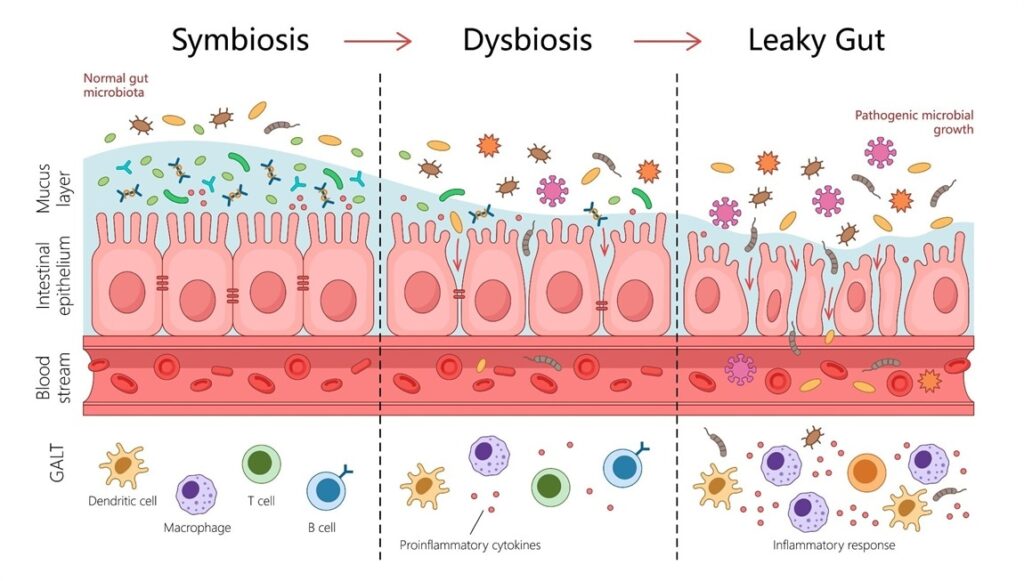
One of the most important functions of the digestive tract is not simply digestion. It is protection.
The intestinal lining acts as a selective barrier between the outside world and the internal environment of the body. Nutrients must pass through this barrier carefully while bacteria, toxins, inflammatory compounds, and partially digested food particles are generally meant to remain contained within the gut.
This barrier is not solid or static. It is living tissue composed of tightly regulated cellular junctions interacting continuously with the microbiome and immune system.
When this barrier becomes damaged or excessively permeable, a condition commonly referred to as increased intestinal permeability or “leaky gut” may develop.
Researchers continue studying the role intestinal permeability may play in inflammatory disease, autoimmune dysfunction, allergies, metabolic disorders, skin disease, and chronic immune activation.
Multiple factors appear capable of contributing to intestinal barrier disruption, including chronic inflammation, poor dietary quality, microbiome imbalance, environmental chemicals, stress, infections, ultra-processed food consumption, and repeated pharmaceutical exposure.
Natural rearers often view this process as one of the central missing conversations in modern canine health.
Because when the gut barrier becomes chronically inflamed or permeable, the immune system may begin reacting continuously to substances it was never intended to encounter so aggressively within the bloodstream and tissues of the body.
Over time, this may contribute to a state of chronic immune dysregulation.
Many people begin noticing this first through seemingly unrelated symptoms: persistent itching, food sensitivities, digestive upset, recurrent ear infections, yeast overgrowth, skin inflammation, behavioral changes, or chronic inflammatory conditions that appear difficult to resolve fully.
This does not mean every case of chronic illness is caused by “leaky gut.” Biology is rarely reducible to a single mechanism.
But increasingly, researchers are recognizing that intestinal barrier integrity appears deeply connected to systemic health.
Natural rearers therefore tend to focus heavily on supporting the gut environment itself through: fresh whole foods, microbial diversity, reduced inflammatory burden, species-appropriate nutrition, stress reduction, and minimizing unnecessary chemical exposure whenever possible.
Because when the integrity of the terrain begins to break down, the consequences rarely remain isolated to the gut alone.
The Microbial World Outside the Body

One of the more interesting developments in microbiome science is the growing recognition that environmental microbial exposure appears deeply connected to immune development.
Animals evolved outdoors.
They evolved exposed to soil organisms, plant compounds, changing weather, sunlight, insects, fungi, fresh air, water, and microbial diversity. Puppies historically encountered rich environmental input from the moment they entered the world.
Today, many animals live highly sanitized indoor lifestyles. They spend large portions of life on artificial flooring, breathing recirculated air, eating sterilized processed food, and encountering limited microbial diversity outside carefully controlled environments.
Yet exposure to diverse environmental microbes plays an important role in educating and regulating the immune system.
Natural rearers often observe that dogs allowed to dig, explore, chew natural materials, interact with healthy soil, experience sunlight, move freely outdoors, and encounter diverse environments frequently grow more physically resilient over time.
There is something deeply biologically coherent about this observation.
Healthy soil itself functions through vast microbial communication networks. Forest ecosystems exchange nutrients and signaling compounds through fungal and bacterial relationships so sophisticated that researchers are barely uncovering their complexity.
The body appears to function similarly. Communication is constant. Balance is dynamic. Life depends on relationship.
And perhaps one of the greatest mistakes of the modern era has been assuming we could remove ourselves from those relationships without consequence.
Building the Resilient Dog
Natural rearing is often misunderstood as the pursuit of perfection or purity.
In reality, most experienced natural rearers understand that complete control is impossible. Dogs will encounter stress, pathogens, toxins, injuries, environmental changes, and biological challenges throughout life.
The goal is not to create a sterile animal. The goal is to create a resilient one.
A resilient dog is able to adapt. Recover. Regulate inflammation appropriately. Maintain microbial balance. Respond proportionally to challenge rather than collapsing under it.
This is one reason natural rearers heavily emphasize fresh whole foods, microbial diversity, outdoor living, sunlight, movement, reduced chemical burden, maternal health, stress reduction, and targeted thoughtful intervention rather than excessive intervention.
Each of these factors appears to influence terrain. And terrain influences resilience.
The deeper many people study biology, the more health begins to look less like a battle against nature and more like a relationship with it.
Relearning the Language of the Body
One of the challenges of modern life is that we have become extraordinarily skilled at silencing symptoms.
But symptoms are just communication. Information.
Inflammation communicates. Skin communicates. Digestion communicates. Behavior communicates. Fatigue communicates. The microbiome itself communicates constantly through chemical signaling networks we are only beginning to understand.
Natural rearing asks us to slow down enough to listen. Not fearfully. Not obsessively. And not with the assumption that every modern tool should be rejected.
But with humility.
Because the more we learn about the microbiome, the clearer it becomes that health is not built through isolated interventions alone. Health emerges from the interaction between systems, environments, nutrition, stress, microbial diversity, genetics, and time.
The body was never meant to function in isolation from the living world around it.
And perhaps rebuilding canine health begins with remembering that.
